
The definitive step-by-step guide to understanding gamification
Gamification has gained the reputation of being one of the most important phenomena in the world of education and business. Its success has been such that educational institutions and companies of all kinds no longer ask if it is worth trying it but, rather, how they can get the most out of it.
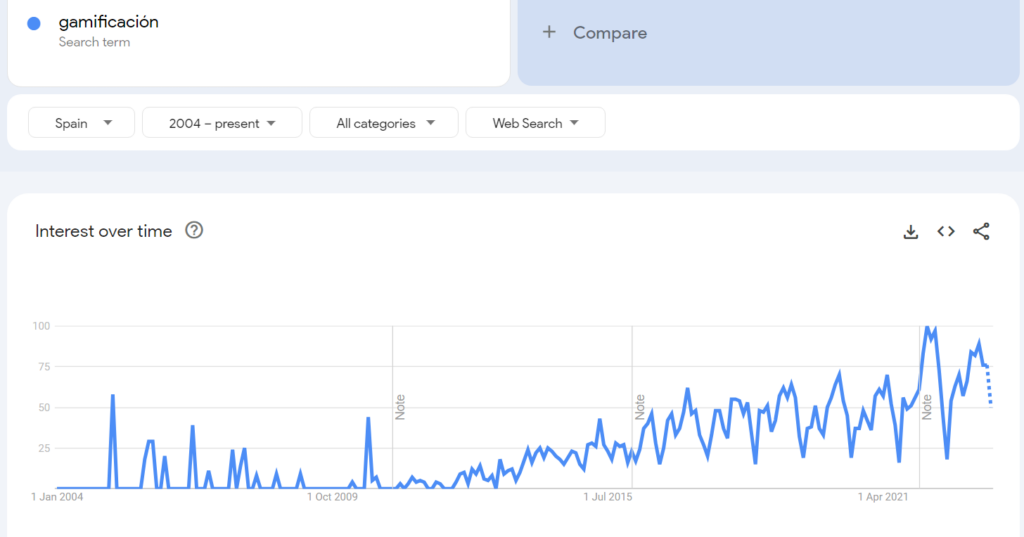
A quick look at the search results for the word on Google is sufficient proof of the growing popularity of gamification in Spain and worldwide. If you want your online training site to be up to date in technology, educational efficiency and quality, you have to gamify, because the competition is already doing it.
In this article we will explain exactly what is meant by gamification, highlight some of the most well-known examples, explain why it works and what techniques it employs.
What is gamification?
Let's start with the concise definition offered by Wikipedia: «Gamification is the application of game design elements and game principles in non-game contexts». It is used for a wide variety of purposes, such as improving productivity at work, promoting physical exercise, improving learning in schools and reinforcing positive behaviour in society.
Gabe Zichermann, one of the first gamification gurus and co-author of «Gamification by Design», is more explicit when describing the different elements that make it up:
«Gamification is the process of attracting people and changing their behaviour through game design, loyalty and behavioural economics. It is taking the fun of games and applying it to situations that may not be so much fun. It is about applying that sense of flow to everything, from employee motivation to research studies and marketing campaigns.»
Gabe Zichermann
Three examples of gamification
If you still haven't quite understood what we mean when we talk about gamification, these three examples will surely clarify it for you.
The first one we want to show you, and possibly the most well-known, had the objective of promoting exercise and a healthier lifestyle. To achieve this, the organisation The Fun Theory installed a giant piano keyboard in a Stockholm metro station that worked and played a musical note when pressure was applied to each step. The idea was that travellers would stop using escalators and go up them. And it was a huge success:
Although gamification is often used to encourage people to adopt more responsible habits (to promote recycling and responsible driving, for example), it can also be used by companies to run promotional campaigns. An example of this can be seen in the following video, in which Coca-Cola organised a kind of obstacle race in a busy train station to promote the launch of the latest James Bond film and gave the winners tickets to see it. The fun, the challenge and the atmosphere (including music) captured the attention of consumers who would otherwise not be interested in the activity and brought to light the two products involved (Coca-Cola Zero and the James Bond film).
The third example is perfect to show some of the mechanics used in gamification in very different contexts. In this case, it is The Email Game, a kind of mini-application to manage email more effectively and keep the inbox clean. Through a reward system, points and penalties, The Email Game aims to end the tedium that the daily avalanche of emails can cause us.
Gamification: awakening people's basic instincts.
Although nowadays gamification is mainly associated with technology, the truth is that its essence lies in human psychology. Gamification works because it appeals to human needs and instincts. In fact, Gabe Zichermann has emphasised this on several occasions: «gamification is 75% psychology and 25% technology».
Specifically, gamification tends to use the following needs:
- Rewards. We all like to receive prizes and gifts. When we were children, for example, we were willing to do our homework in exchange for a special dessert or a small tip. This innate behaviour is one of the engines that make gamification work, which allows using all kinds of rewards (cinema tickets, virtual coins, extra lives, etc.) to motivate us to perform a task.
- Progress. Humans like to progress. We like to feel that we are improving in any task and that our actions bring us closer to achieving our final goal. Gamification takes advantage of the human need to progress to motivate and engage participants.
- Competition. We all like to win. If we practice athletics, we want to be the first to cross the finish line and, as we get older, we like to stand out in our studies or careers. The desire to compete is even greater when we know our rivals: we want to do better than our friends and colleagues.
- Recognition and status. Boasting about our achievements is part of human nature. One of the reasons why social media is so successful is that it allows us to satisfy our desire to boast: showing off what we know how to do well, demonstrating our skills, boasting about our last holidays on an idyllic beach, etc. Gamification appeals to our need for recognition by creating ways to share with others (rubbing it in their noses) our achievements within the game.
- Altruism. Without entering into philosophical or sociological debates, science has shown that humans have a natural tendency towards altruism and solidarity. In general, we like to help others because it makes us feel better about ourselves. Many games revolve around the idea of rescuing a princess (or a prince), saving the world or avoiding an environmental disaster.
- Fun. Having fun is another innate need of the human being. We all like to relax, have fun and enjoy ourselves. That is why cinema, music and video games are multi-billion dollar industries: we are willing to pay to have fun. Gamification (as we have seen in the three examples) plays with this desire to have fun to engage and motivate people.
Techniques of gamification.
To appeal to our human instincts, gamification has developed a series of techniques that you probably know. Perhaps you haven't paid much attention to them, but these are the techniques that make gamification work and that are increasingly being implemented in companies and educational institutions.
Based on the classifications made by two great experts in the matter -video game designers Jesse Schell and Dustin DiTommaso-
1.- A story. We all like a good story, with characters and plot. The plot (which can be very sophisticated or very simple) serves to hook players and motivate them to continue in practically any activity. The story can be about a prince who has to rescue a princess, a mission to save Planet Earth or a zombie apocalypse. In fact, the latter is being successfully applied in the United States, where students learn geography techniques to survive a zombie apocalypse.
2.- Levels. At the beginning of almost any game, one of the first things we see are the levels. Normally we start with the lowest level but, already in this phase, we start to glimpse the route (sometimes a map) that we have to follow to get to the end. The feeling of progress, success and recognition that this dynamic generates (we want to move to the next level!) motivates us to keep advancing in the game.
3.- The countdown. Setting a time limit is one of the most used techniques in gamification, television programmes and marketing campaigns. More and more mobile applications include phrases such as «you have 30 seconds left», «this week's challenge» or «make today the day you move to the next screen». A time limit or countdown (the famous «10, 9, 8, 7…») is a highly motivating element that encourages us to complete any activity as soon as possible.
4 – Badges. Badges are a very effective means of granting recognition and status to players. Gamification uses this type of reward (it is so «simple» as putting a golden badge next to your profile) so that you can boast about your achievements on social media or to your friends and colleagues.
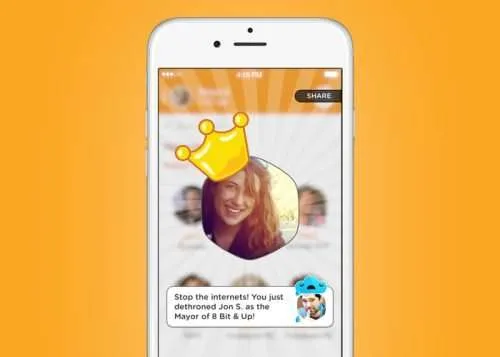
Foursquare, a mobile application specialised in bars, restaurants and leisure venues, has been one of the most effective in the use of badges to attract users. Among the numerous badges is the possibility of becoming the «mayor» of a venue. To win it, you have to be the person with the most check-ins of that venue, which can become an addiction that pushes you to use the application for hours and hours.
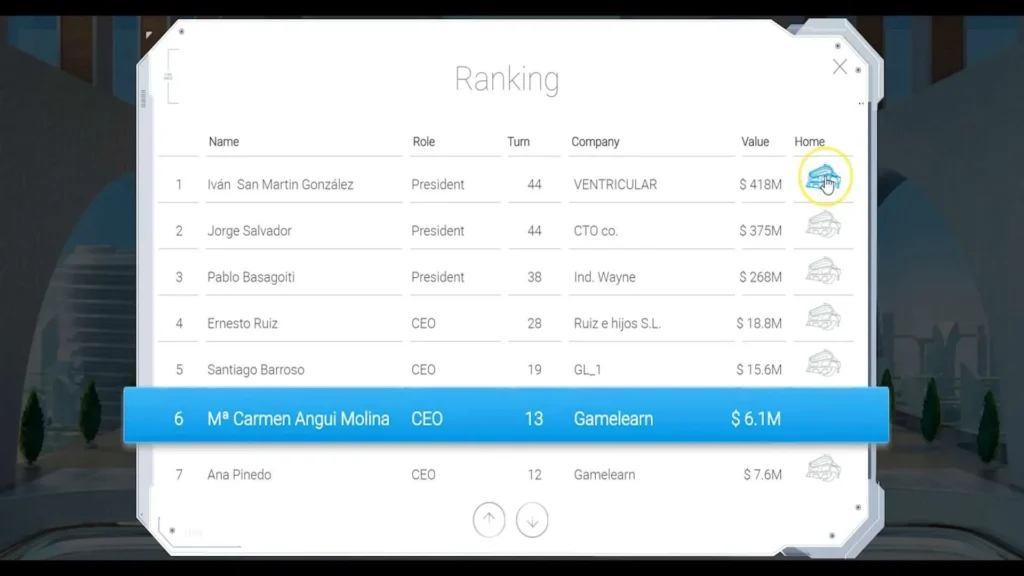
5 – Rankings. You are probably so used to them that you have never stopped to think about them, but rankings/rankings are another element used in gamification to foster competition and encourage users to keep going in something. When you look at a ranking, you check your position to see who is ahead of you… and it is normal to want to pass them and go to the first place on the list.
6 – Virtual coins, points, stars, extra lives… To appeal to our materialistic nature and our need to obtain small rewards, gamification usually employs virtual coins, points or stars to attract and motivate users. Rewards are simple and direct, but an extremely powerful tool to change people's behaviour. We all like to win double points, extra lives and more stars (even though they are useless to us).
7 – Upgrades (upgrades / power-ups). When we start a game, we usually have few tools or powers at our disposal. However, as we progress, video games give us new skills, different weapons and more powers. As we overcome more milestones, we have the power to do more things. This type of reward (which appeals to our need to progress) is another game mechanic used in gamification.
8 – Progress bars. A simple bar with a percentage inside can be much more powerful than thought. When we see that it is not complete (for example, at 85%), humans tend to do everything possible to reach 100%. If you have an account on LinkedIn, you will surely have noticed the progress bar that indicates how complete your profile is; according to the company itself, when they added the progress bar, the amount of information included in users' profiles increased considerably.

9 – Teamwork. Another way to foster competition is to create groups or teams; people like to feel that they belong to a tribe and are better than others. Dividing players into factions can be a powerful incentive to get more involved in a project, identify with their colleagues and defeat their rivals.
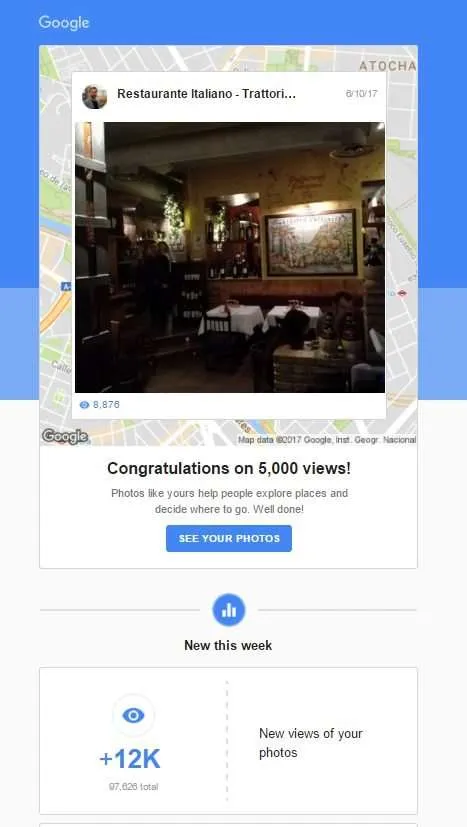
10 – Likes and recommendations. Given the popularity of social media in the current world, gamification has incorporated recognition on Facebook and Twitter (or X, whatever Elon Musk thinks of at that time) as an additional motivating element. It is not just about being able to share our achievements and badges; you can also reward «players» by giving them reach and status on social media.
The service Local Guides of Google is a good example of this game dynamic. The Silicon Valley company has a gamified system to encourage users to leave reviews and publish photos of the bars and restaurants they visit. One of the techniques consists of sending them an email notifying them of the number of visits to their reviews and of the important contribution they are making to society.
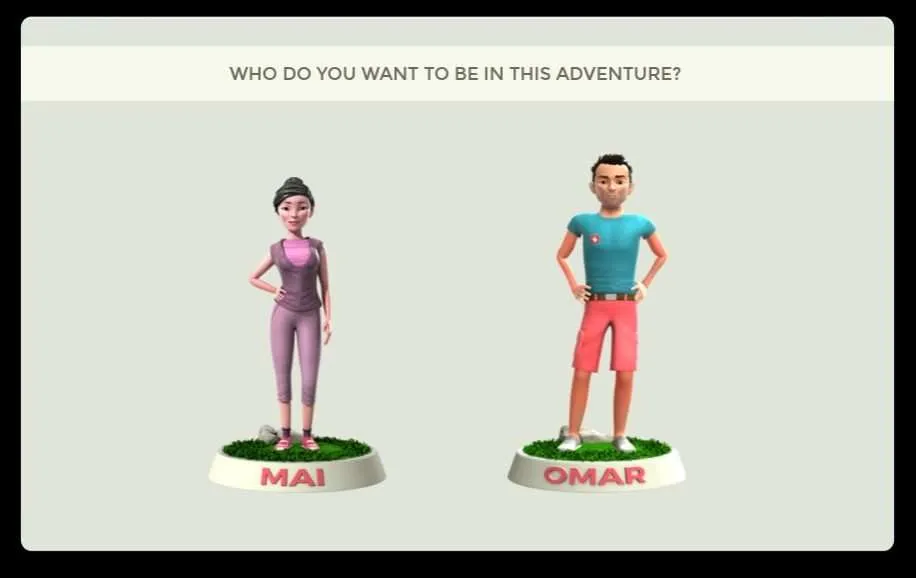
11 – Character selection. People like to be able to choose and identify with the characters of a game. That is why, a simple gamification technique is the possibility of selecting characters. Whether it is launching a new project or completing a training course in a company, characters add a more playful and fun touch to the game. And if, in addition, we can choose between several types of characters (man/woman, fast/strong, white/black, etc.), we can increase several points the motivation levels.
The true secret of the gamification
Although these gamification techniques may seem quite simple, do not be fooled by their apparent simplicity. As gamification guru Yu-Kai Chou explains, the key is that all these game dynamics appeal to our basic human instincts.
Creating a points system, a ranking and a progress bar and trusting that your gamification experience will be a success is like opening a Facebook page and thinking you have developed a social media strategy. The key is to think first about the things that motivate humans (competition, status, altruism, rewards, etc.) and then develop a strategy to achieve them (a story, levels, points, badges, etc.).
The true secret of gamification lies in creating a winning combination of all these elements.
